New Article: The Tension of Truth

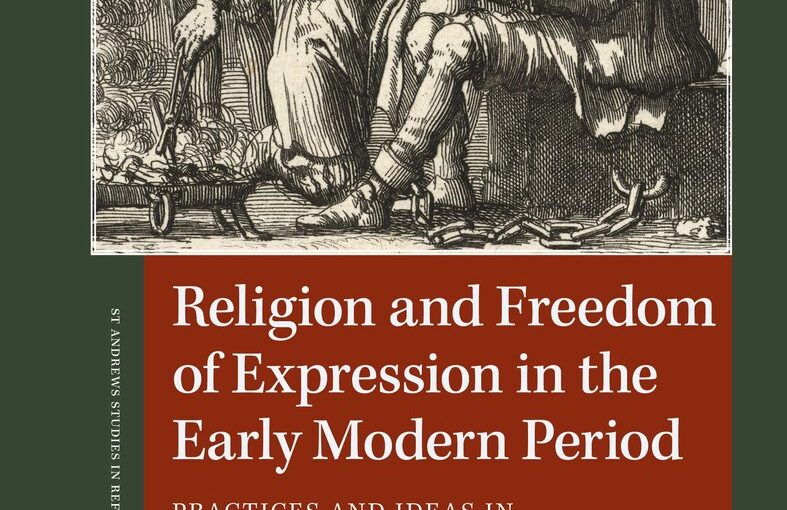
I am pleased to announce that my latest article ‘The Tension of Truth. Free Speech and the Avvisi’ has been published in the volume Religion and Freedom of Expression in the Early Modern Period: Practices and Ideas in Post-Reformation Europe edited by Silke Muylaert, Francesco Quatrini, and Nina Schroeder.

The article is the result of the research undertaken for one of my dissertation chapters, and subsequently further developed during my postdoctoral period in DC. Special thanks go to the editors for their thoughtful comments and helpful input, without which the article would not be in ints present form.

A link to this publication can be found here; https://doi.org/10.1163/9789004543003_004

Past Conference: RSA 2026 San Francisco

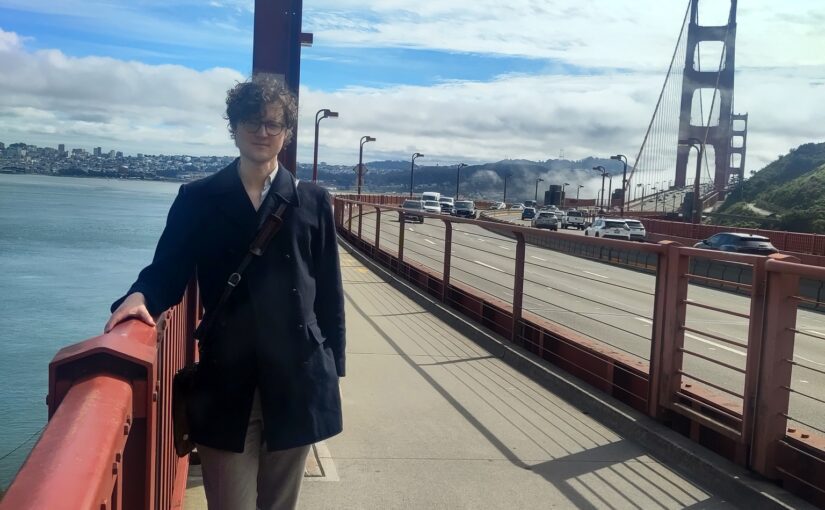
After missing last year’s RSA in Boston, I was able to join this year in San Francisco. My presentation was part of an annual panel series that I have always been interested in, namely ‘New Technologies and Renaissance Studies,’ organized by ITER. The panel included another paper that also addressed automatically recognizing features in document layouts.

It was a good opportunity to share the latest developments from my ongoing project on a workflow for the automated digitization and indexation of handwritten newsletters. The panel included another paper that also addressed automated recognition of layout features.

The panel and conference were therefore very fruitful, and it was good to see many familiar faces.

Past Conference: Corruption and Scandal

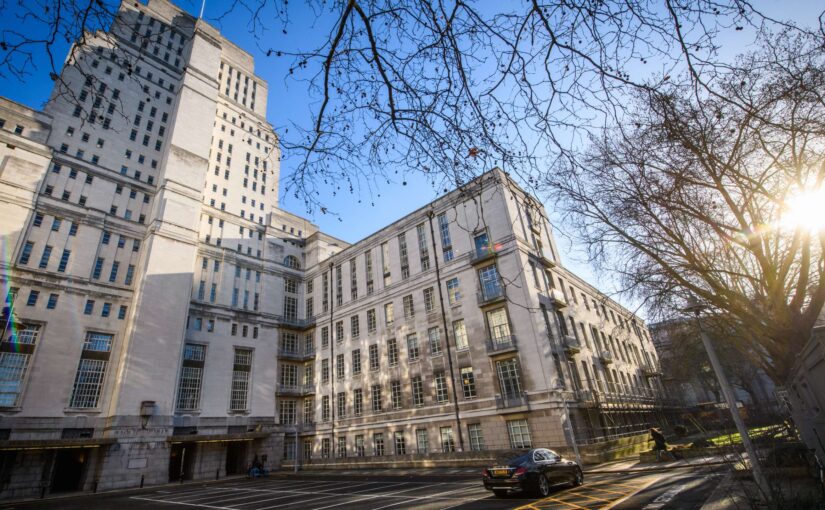
Last week, I enjoyed the opportunity to present some of the ongoing research of the MALCONTENTS project at the conference ‘Corruption and Scandal in the Early Modern World, 1500-1800’ at the Institute for Historical Research in London. This was the first time that I attended a conference on behalf of Limerick’s MALCONTENTS project on social deviance among the early modern German professoriate.

My talk was titled ‘Reputation and Scandal in the Early Modern University: Delinquent Professors at the University of Rostock in the Sixteenth Century’ and was based on the archival work that I conducted in Rostock at the end of last year. The MALCONTENTS P.I., Richard Kirwan, has also been instrumental and supportive during this research and the preparation of the conference paper. The talk was a fruitful test case for transforming the archival work that we have undertaken into compelling research output. The conference was furthermore an excellent opportunity for us to contextualize our case studies within the broader framework of corruption and especially scandal.

Past Conference: The Future of Paleography, Paleography of the Future

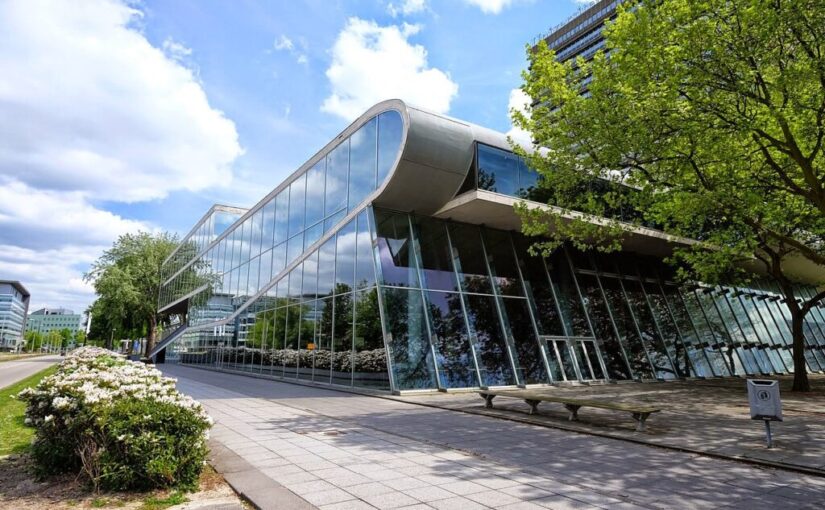
Last week, a conference on Handwritten Text Recognition (HTR) was held in my home country, the Netherlands. Given my strong interest in HTR applications, I did not want to miss the opportunity and travelled to Utrecht. There, I attended presentations on the latest developments in the field and presented my ongoing project during the poster session, titled “The Anatomy of the Avviso: Manuscript News in Early Modern Europe.”

New Job, New City

As I feel sorry to leave DC – the city has been great to me – I am also very excited to start a new chapter. From October 2025, I will become a postdoctoral fellow in the MALCONTENTS Project taking place at the University of Limerick. The MALCONTENTS Project studies social dissidence among the German professoriate of Early Modern Universities. In addition to moving to Ireland, this also means that I will further deepen my expertise in German History; a field I had already been moving towards, of course, during my time at the German Historical Institute.

New Fellowship: Folger Library

This month, I began a short-term fellowship at the Folger Library. For the time being, this means that my living situation will remain unchanged, and I will continue to stay in DC.

The fellowship will allow me to study the handwritten newsletters preserved in the Folger Collection. An exciting opportunity that will allow me to compare their contents with those of other collections.

I decided to schedule the start of the fellowship in the summer, as there is additional career news. I hope to share an update about this soon!

PhD Graduation

As this website has become an overview of my undertakings over the past couple of years, there is one major event that cannot be left out: my graduation. Because of my fellowship in Washington, D.C., I eventually decided to conduct the viva voce online. The logistics of traveling back were simply too complicated, and I suppose doing the viva without jet lag is also much easier.

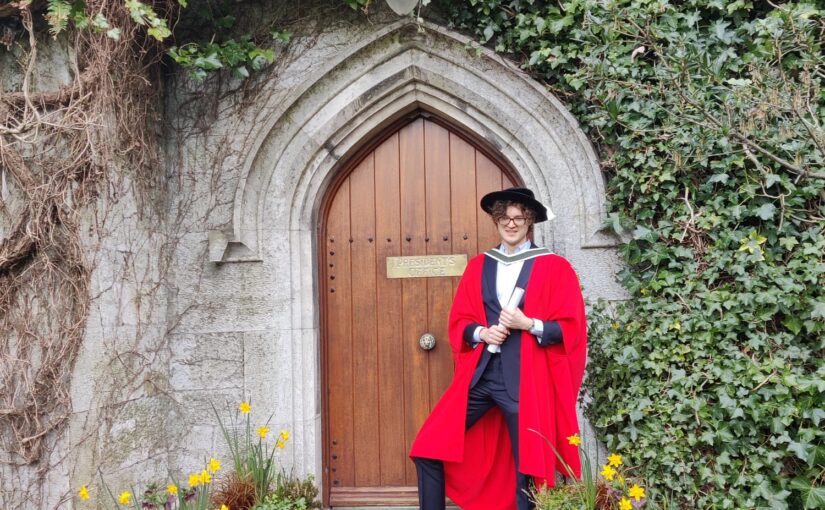
Therefore, it was only more important to me to be physically present at my PhD graduation. Therefore, I flew to Irland, where I also met several family members and friends. This made the day only more special of course, and I am very grateful that so many people could be present.

It was nice too to have my own photo moments, such as one can see here. Al together, it was the end to a very special period of my life.

Past Conference: RSA 2024 Chicago

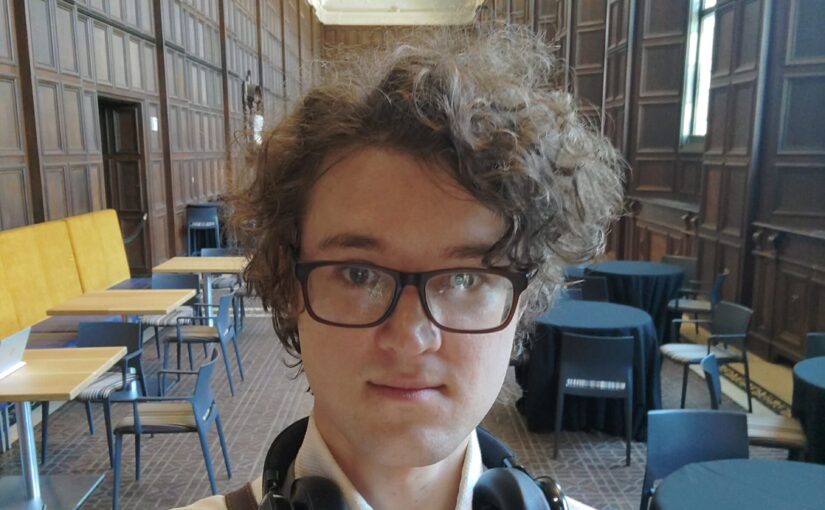
After last year’s RSA in San Juan, Puerto Rico, this time there was a completely different setting: Chicago. On the photo featured here, you can see me in action on the last day of the conference. That was too bad, especially since I had hoped for better after last year, but the conference in general proved very fruitful.

I used this opportunity, to present someo of the work that I undertook for my dissertation. In the near future, I hope to turn this into an article. My abstract was as follows:

In the early modern period, news circulated through easily adaptable anonymous handwritten news-sheets. This paper discusses how the analysis of these adaptations aids our understanding of the broader networks in which this type of document circulated. It comprises a structural comparison based on a dataset built from two different archives and highlights examples of similarities both between and within these collections.

How and when these documents were created is difficult to unravel as they were frequently copied, edited, and paraphrased. The advantage is, however, that with the application of similarity analysis, we can systematically recover the documents’ textual history. The mathematical formula of cosine similarity traces news items with a high degree of similitude across the dataset. This enables one to recover traces of how news traveled between regions and illuminates to what extent different collections were based on the same sources. This method also resurfaced some particularly intriguing examples of news writers making small mistakes during the process of newsletter compilation. This further illuminates the method in which these documents were created on which we otherwise know very little.

Past Conference: 16th-Century Conference Baltimore

This year, the annual conference of the Sixteenth Century Society was held in Baltimore between 26 and 29 October. As I stationed not too far from there this year, it seemed a good opportunity to participate in person.

Instead of presenting from my current project on early modern news, I decided to go back and prepare some material taken from my master’s thesis, which was also based on extensive archival research.

Read my complete abstract here:

The blame for the French descent in Italy of 1494 is not rarely put on Ludovico Sforza. That has not been without reason as he was instrumental in Charles VIII’s advent. The overtly Italian patriotic rhetorics that he would express after his volte-face and adherence to the Italian league in 1495 has therefore raised many eyebrows. Less known, however, are his involvement in discussions on ‘the health of Italy’ while still collaborating with the French the year prior. When reading the correspondence with his Este and Gonzaga relatives residing in their own Padan courts, it is striking how often they dwell upon ‘the matters of Italy’. Already in 1494, before the French had even set foot in Italy, Ludovico seems fully aware that he endangered the international position of his own state as well as those of other Italian princes.

The fact that Ludovico felt pressured to come up with excuses in front of his peers for harming the interests of ‘Italy’ shows that this was a matter of concern among his relatives. A recurring expression in the correspondence is that of ‘Italy and her states’. The elite, therefore, seems to have represented the Italian ‘nation’ first and foremost as the status quo among themselves. As the princes of these states were often related to each other, the notion of the nation is therefore sometimes represented as a family affair, notwithstanding the heavy-handedness which with some of these Renaissance princes treated their relatives.
New Year, New Adventures

I am elated that this year I am embarking on an exciting new adventure. Because my dissertation is all but finished, I have been able to think about the ‘what after’ question. This has resulted in a year-long fellowship at the German Historical Institute, Washington and George Mason University. That also means that in about a week, I will be moving to the DMV area in order to attend the institutions of this residential fellowship.

During my PhD, I have obviously extensively worked on manuscript newsletters. Thanks to my Gerda Henkel Fellowship, I will be able to continue doing this in a completely different way. Whereas at first, the documents were still mainly transcribed manually, in this fellowship I will aim to integrate Handwritten Text Recognition (HTR) technologies in my workflow.

css.php